
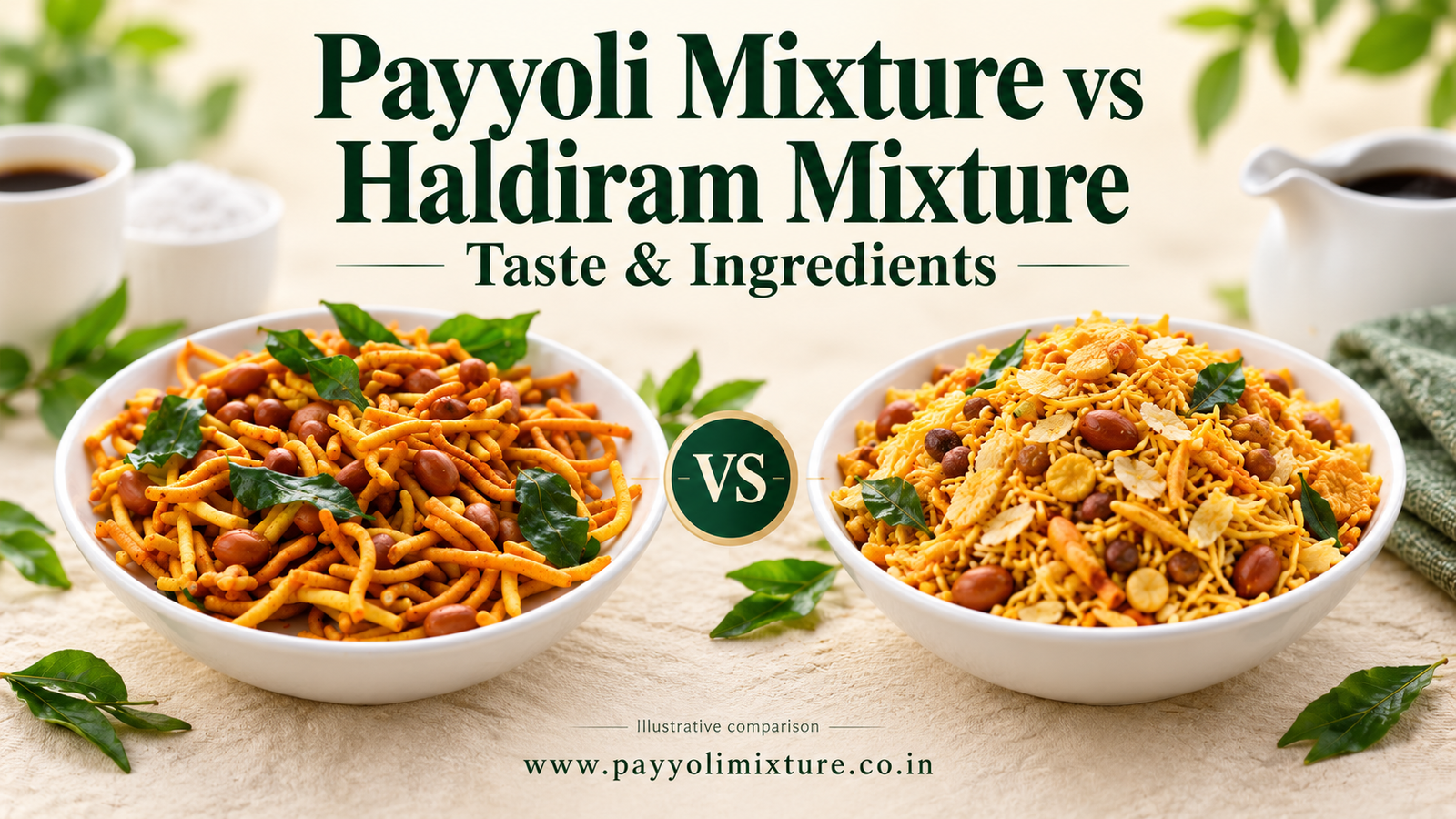
Payyoli Mixture is a Kerala-style snack built mainly on fried flour pieces, peanuts and curry leaves. Haldiram mixture is not one product, because the brand sells several mixtures. The best-documented one, Haldiram Kaju Mixture, declares 22% split green gram (moong), 21% gram pulse flour and 12% cashews on its official label.
So the real choice is between two different snack styles, not two versions of the same thing. Below we compare the labels, explain what they suggest about texture and spice, and give you a quick checklist so you can pick the pack that suits your taste.
One caveat applies to everything in this article: recipes change, and Payyoli Mixture differs from maker to maker. Treat the physical pack label as the final word. We will not repeat this in every section.
What Is Payyoli Mixture?
Payyoli Mixture is named after Payyoli, a town in Kozhikode district on Kerala’s Malabar coast. It belongs to the family of Kerala bakery mixtures, the crunchy savoury blends sold in tea shops across the state.
No single official recipe exists. Some makers fry in coconut oil, some add tapioca pieces, fried garlic or cashews, and others keep it simple. As one product-specific example, the Malbariswaad Payyoli Mixture listing names gram flour, rice flour, peanuts, curry leaves, dry red chilli powder, turmeric, asafoetida, salt and vegetable oil.
That list shows the typical pattern: sev and boondi-style flour pieces, peanuts for bite, and fried curry leaves for aroma. Whether a pack is a coconut oil snack depends on the maker, so check the oil named on the label.
What Varieties of Haldiram Mixture Are Available?
The Haldiram official 200 g snacks catalogue lists several mixture-style products. Three names come up most often when shoppers compare.
Haldiram Mixture (classic)
The general Haldiram mixture is a traditional namkeen blend. Its exact ingredient list should be read from the current pack or catalogue entry, as we have not reproduced percentages we could not verify.
Haldiram Kaju Mixture
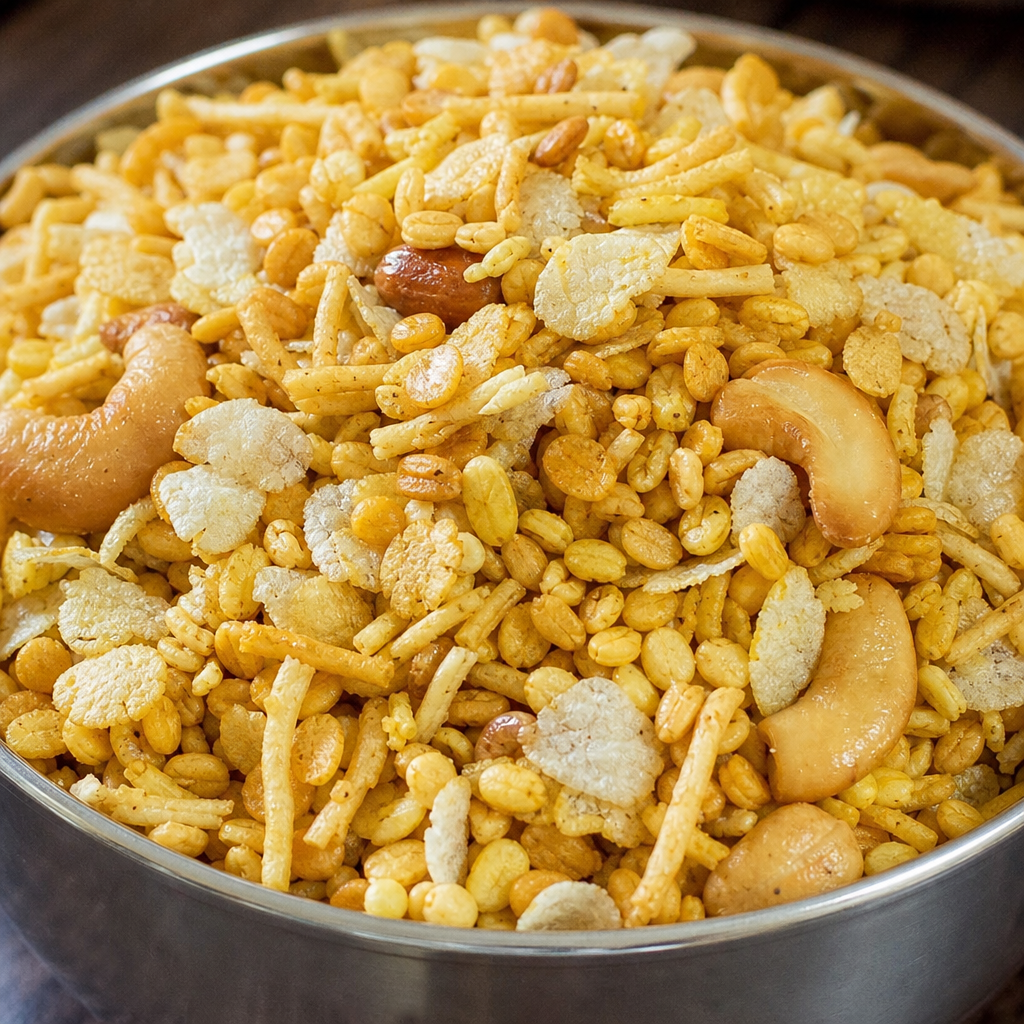
This is the variety with the clearest public data. The Haldiram Kaju Mixture 200 g product page declares:
- Split green gram (moong dal): 22%
- Gram pulse flour: 21%
- Cashews: 12%
- Potatoes: 8%
- Lentils: 5%
- Rice flakes, spinach, edible oil and spices
Haldiram Lite Mixture
Haldiram Lite Mixture is a separate SKU. “Lite” is a product name, not a health claim. If lower fat or sodium matters to you, compare its nutrition panel per 100 g against the other pack before deciding.
How Do the Ingredients, Texture and Spice Levels Compare?
Here is a compact snapshot comparing the Payyoli example listing with Haldiram Kaju Mixture.
- Main base: Payyoli: gram flour and rice flour. Haldiram Kaju: split green gram and gram pulse flour.
- Nut: Payyoli: peanuts. Haldiram Kaju: cashews (12%).
- Add-ins: Payyoli: curry leaves (some makers add garlic, tapioca or cashew). Haldiram Kaju: potato, rice flakes, spinach, lentils.
- Spice profile listed: Payyoli: chilli, turmeric, asafoetida. Haldiram Kaju: a broader spice blend.
- Percentages declared: Payyoli listing: none. Haldiram Kaju: several.
- Allergens: Both contain nuts (peanut or cashew).
Texture
Flour-based pieces usually give a dry, brittle crunch, with firmer peanuts and thin crisp curry leaves. A dal-based mix like Kaju Mixture offers small hard moong grains, richer cashews and light potato and rice flakes. One is more uniform, the other more varied.
Spice
A label lists spices but cannot measure heat. The Payyoli example points to straightforward chilli warmth with hing and curry leaf aroma. The Kaju Mixture’s longer spice list suggests a layered masala. If heat matters, buy a small pack first.
We have not listed nutrition values here because we could not verify current panels for every product. Read energy, fat, sodium and protein per 100 g directly from the packs.
How Does Kerala-Style Mixture Fit Into Tea Time and Puttu Pairings?
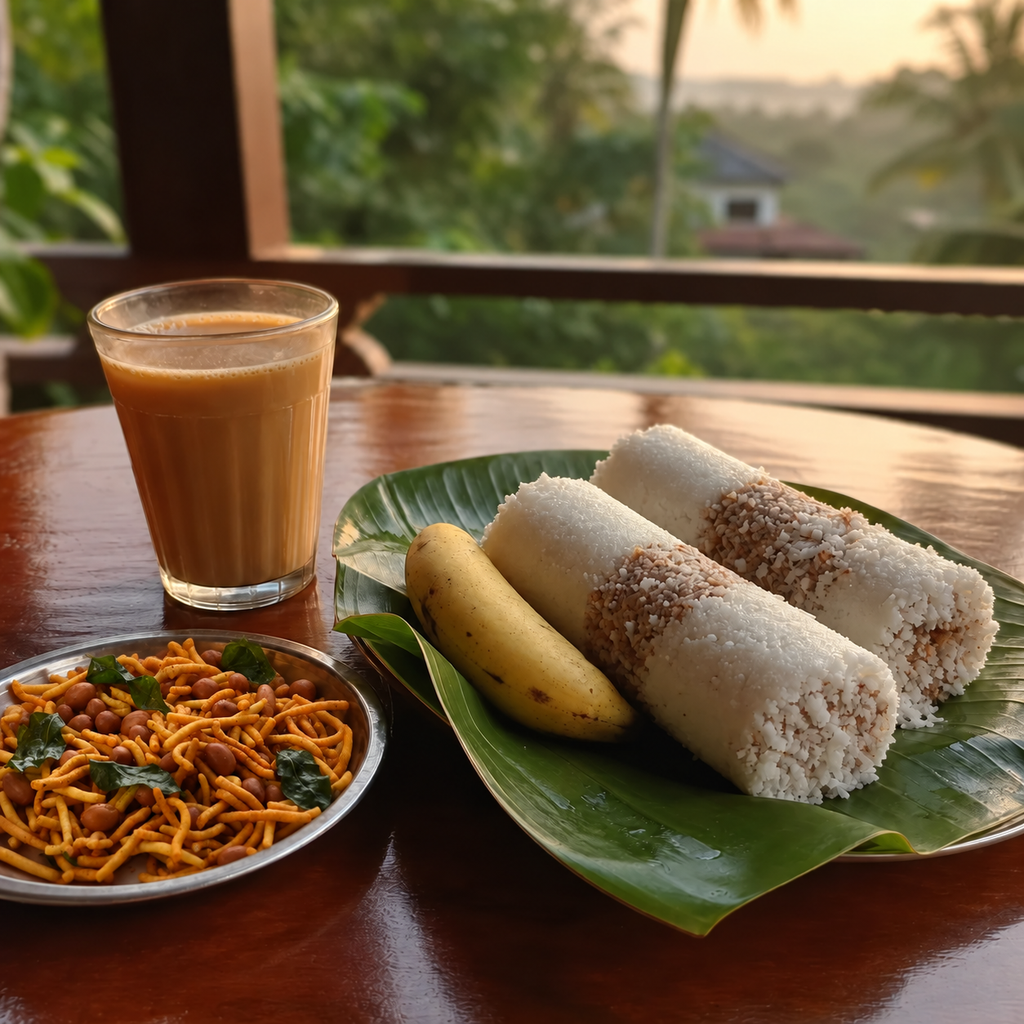
In Kerala, a small plate of mixture beside a glass of chaya is a familiar evening scene. That is the natural setting for kerala tea time snacks payyoli mixture blends. Any mixture can be served these ways; they are ideas, not product attributes.
- Tea-time plate: a small bowl with hot tea or filter coffee, plus banana chips for contrast.
- With puttu: some households eat soft steamed puttu with banana and a spoonful of mixture on the side for crunch.
- Quick chaat: toss with onion, tomato, lime and coriander.
- Curd rice topping: a spoonful adds texture.
Haldiram Kaju Mixture also works at tea time, but its flavour sits closer to North Indian namkeen snacks. If you want the curry leaf and hing aroma of a Kerala bakery, a Payyoli-style pack is the closer match. See more ideas in our guide to Kerala tea-time snacks.
What Should You Look for When Choosing a Haldiram Mixture or Payyoli Pack?
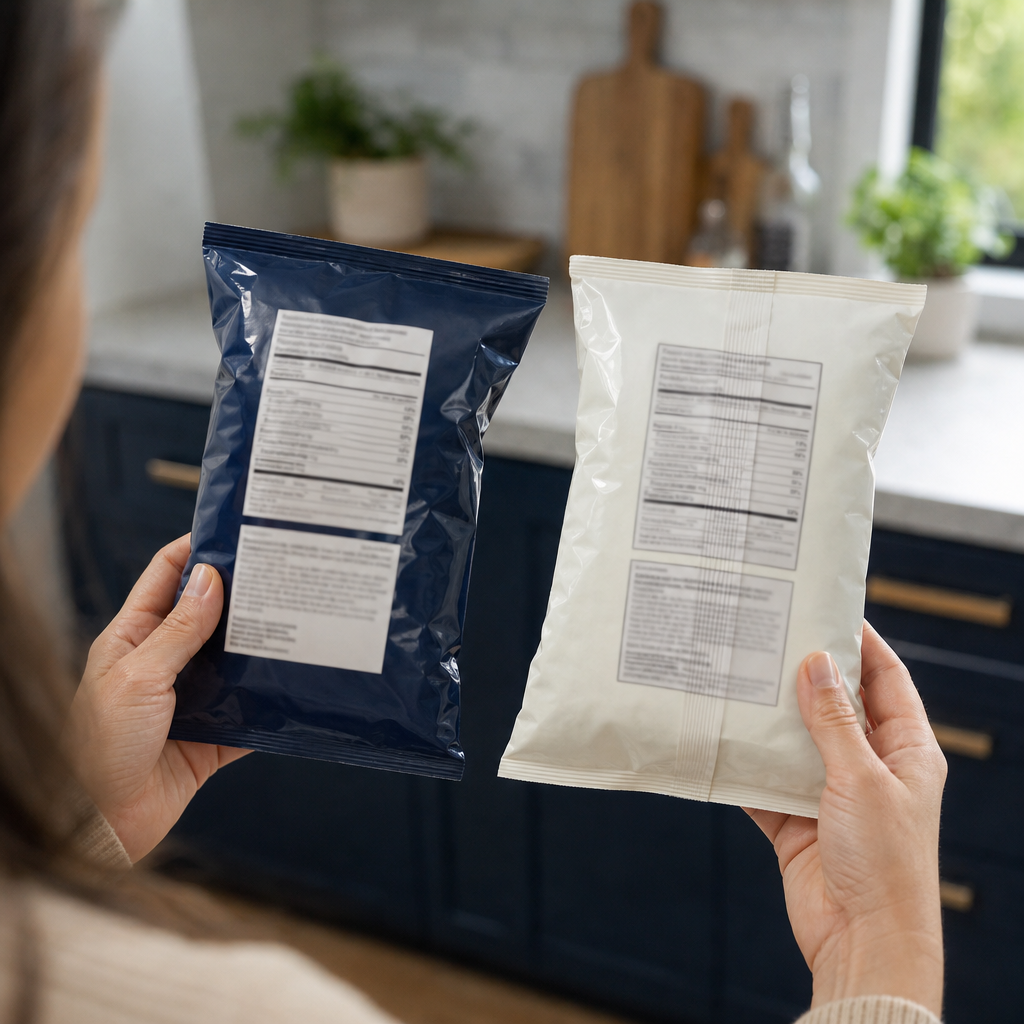
Packaged food in India follows the FSSAI Labelling and Display Regulations, 2020, which cover ingredient lists and nutrition information. The 2025 FSSAI labelling compendium holds the latest provisions. Use them to run this quick check:
- Exact SKU name: Kaju, Lite and classic are different products.
- Ingredient order: ingredients appear in descending order by weight, so the first three tell you the base.
- Declared percentages: check highlighted items, such as the 12% cashews.
- Nutrition per 100 g: compare like for like, since serving sizes differ.
- Allergens: peanuts, tree nuts, gluten.
- Net weight, date and FSSAI licence number.
Illustrative price per 100 g example
These numbers are hypothetical, for illustration only. A ₹60 pack of 150 g works out to ₹40 per 100 g. A ₹90 pack of 200 g works out to ₹45 per 100 g. The bigger pack is not always cheaper, so do the division before you buy.
Where to Buy Payyoli Mixture Online?
Several Kerala snack sellers list Payyoli Mixture online, including the Malbariswaad listing referenced above. Before ordering, check the live ingredient list, net weight, back-of-pack photos, shelf life, and whether the seller delivers to your PIN code or country.
Disclosure: we sell Payyoli Mixture ourselves. You can view the ingredients and pack sizes on our Payyoli Mixture product page and confirm current delivery coverage on our shipping information page before you order.
The Verdict: Choose by Taste, Confirm by Label
Neither snack is better or healthier on the evidence available. They are simply different styles.
- Pick Payyoli Mixture if you like flour-based crunch, peanuts, fried curry leaves and a simple chilli-hing flavour with Kerala tea.
- Pick Haldiram Kaju Mixture if you prefer a dal-led namkeen with cashews, potato and rice flakes.
- Considering Haldiram Lite Mixture or the classic Haldiram mixture? Run the same label check on that exact SKU.
Want to try the Kerala side of the comparison? Explore our Kerala snacks range, read the pack details, and contact our team if you have questions about ingredients.
FAQ
What is the main difference between Payyoli Mixture and Haldiram mixture?
Payyoli Mixture is a Kerala-style blend usually built on gram flour and rice flour pieces, peanuts and fried curry leaves. Haldiram sells several mixtures. Its Kaju Mixture leads with split green gram (22%) and gram pulse flour (21%) and adds cashews (12%), potato and rice flakes.
Is Haldiram Lite Mixture healthier?
Not necessarily. Lite is a product name, not a health claim. To judge it, compare its nutrition panel per 100 g, especially energy, fat and sodium, against the other pack you are considering.
Is Payyoli Mixture healthier than Haldiram Kaju Mixture?
Neither can be called healthier without comparing the exact packs’ nutrition panels per 100 g. Payyoli recipes vary by maker, so compare the specific products side by side.
Do both mixtures contain nuts?
Typically yes. Payyoli Mixture usually contains peanuts, and Haldiram Kaju Mixture contains cashews. Anyone with a nut allergy should read the allergen line on the exact pack.
How is Kerala mixture served with puttu?
Some households eat steamed puttu with banana and a spoonful of mixture on the side for crunch. It is a home-style serving idea, not a fixed tradition, and it also suits evening tea.
