
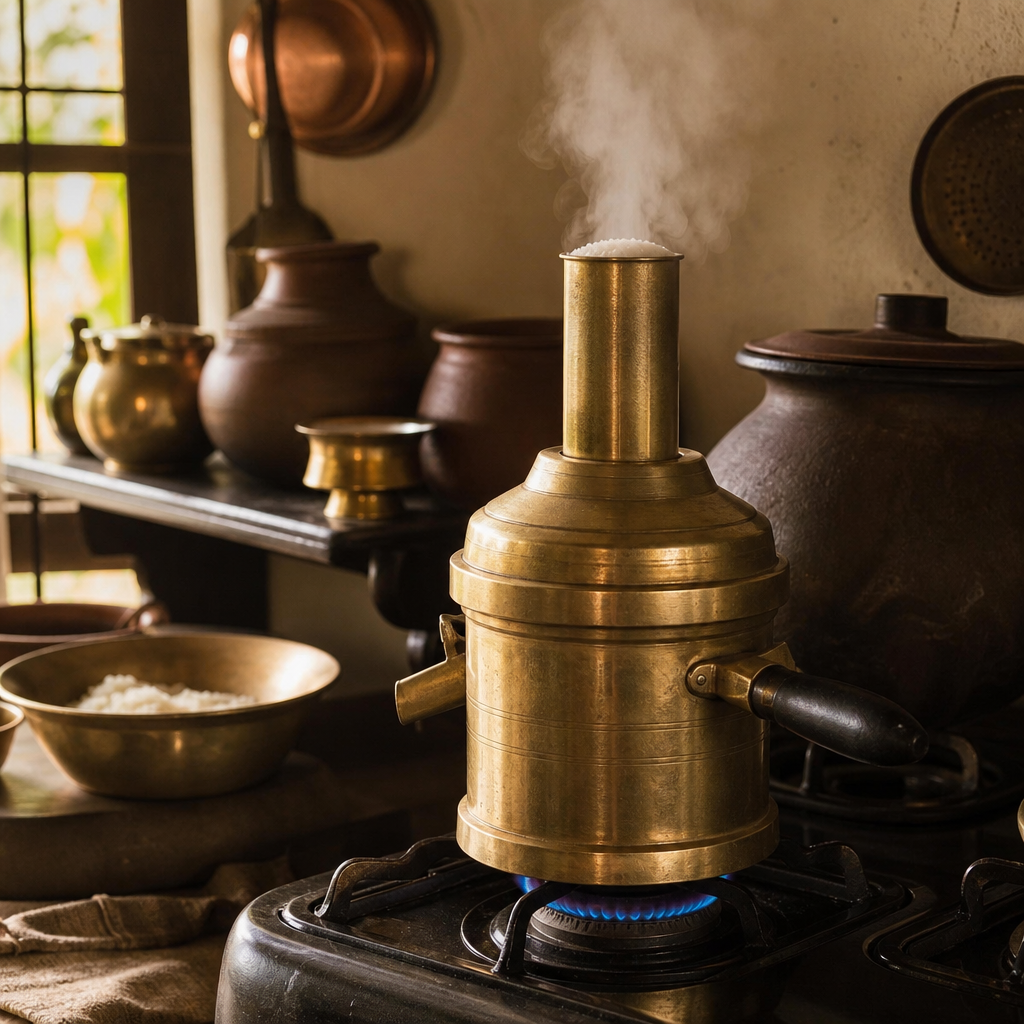
There is a specific kind of morning ritual in Kerala homes that no recipe card can fully capture. A grandmother lifts the lid of a puttu kutti – the cylindrical brass steamer that has sat on her stove for thirty years – and the kitchen fills with the warm, faintly sweet smell of freshly steamed rice and coconut. Then comes the crunch: a handful of Payyoli mixture scattered over the soft white cake, and suddenly breakfast becomes something worth waking up for.
That contrast – soft and crunchy, mild and spiced, steamed and fried – is not accidental. It is centuries of culinary instinct distilled into a single bowl. This guide walks you through exactly what puttu and Payyoli mixture are, why they work so well together, how to prepare them at home, and where to source authentic ingredients if you live outside Kerala.
The Cultural Significance of Puttu in Kerala Cuisine
Puttu is one of those dishes that quietly defines a place. It appears at breakfast tables from Thiruvananthapuram to Kasaragod, served in humble tea shops and five-star hotel buffets alike. It is eaten with kadala curry on Sundays, with ripe banana on weekday mornings, and now, increasingly, with the crunchy brightness of Payyoli mixture.
The dish has deep roots in the agricultural traditions of Kerala, where rice – grown in the paddy fields that line the backwaters – formed the backbone of daily nutrition. Steaming rather than frying was the dominant cooking method, which kept the food light, digestible, and suited to a warm, humid climate.
Today, puttu travels far beyond Kerala. The India Brand Equity Foundation reports that India’s e-commerce food and grocery segment grew by 35% year-over-year in 2023, driven significantly by regional specialty products like puttu podi reaching diaspora communities in the UAE, the UK, and North America.
What Is Puttu? A Complete Breakdown
Definition: Puttu in Plain Terms
Puttu is a traditional steamed rice cake from Kerala, made by layering coarsely ground rice flour (puttu podi) with grated coconut inside a cylindrical steamer called a puttu kutti. The steaming process takes five to seven minutes and produces a firm yet crumbly cake that holds its shape but breaks apart easily in the hand. It is gluten-free, oil-free, and mildly flavored by design.
Core Ingredients
- Puttu podi (rice flour): Coarsely ground, either white or red (red being more common in northern Kerala). The grind matters – too fine and the puttu becomes dense; too coarse and it falls apart.
- Fresh grated coconut: Added in alternating layers. It provides moisture, fat, and a subtle sweetness that balances the neutral rice flour. A food processor works well if fresh coconut is unavailable; desiccated coconut is a distant substitute.
- Water: Mixed into the flour by hand until it resembles wet sand – it should clump when pressed but crumble when dropped. A kitchen scale helps here; the typical ratio is 1 cup of flour to roughly 70-80 ml of water, adjusted by feel.
- Salt: A pinch, worked into the flour before steaming.
Traditional Varieties: White, Red, and Beyond
White puttu uses raw rice flour and is the most common variety. Red puttu (also called Kerala red rice puttu or chemba puttu) uses red rice flour, which has a nuttier, earthier taste and a slightly denser texture. It is also higher in fiber and minerals, making it a preferred choice for health-conscious eaters.
Two other varieties deserve attention for home cooks who want to experiment:
- Ragi puttu (finger millet): Made with ragi flour, this version has a distinctly earthy, almost smoky flavor. The texture is denser and slightly stickier than white puttu, and the color is a deep grayish-brown. It pairs particularly well with jaggery and banana.
- Wheat puttu: Uses atta (whole wheat flour) instead of rice flour. The result is softer and slightly chewier, with a mild wheat flavor. It does not hold its cylindrical shape as cleanly as rice puttu, but it works well for families transitioning from wheat-heavy diets.
The key practical difference between ragi and wheat puttu is moisture management. Ragi flour absorbs water quickly and can become gummy if over-moistened; wheat flour requires slightly more water and benefits from a two-minute rest after mixing. Both varieties steam well in a standard puttu kutti.
According to KK Food Products’ comprehensive puttu guide, the quality of the rice flour is the single most important variable in achieving the right texture – pre-packaged puttu podi that has been specifically milled for steaming will consistently outperform generic rice flour.
What Is Payyoli Mixture? Origins and What Makes It Crunchy
Payyoli is a small coastal town in Kozhikode district, northern Kerala. It sits on the Malabar Coast, and its food culture is shaped by centuries of spice trade, fishing communities, and a fierce local pride in doing things the traditional way. The mixture that carries its name is one expression of that pride.
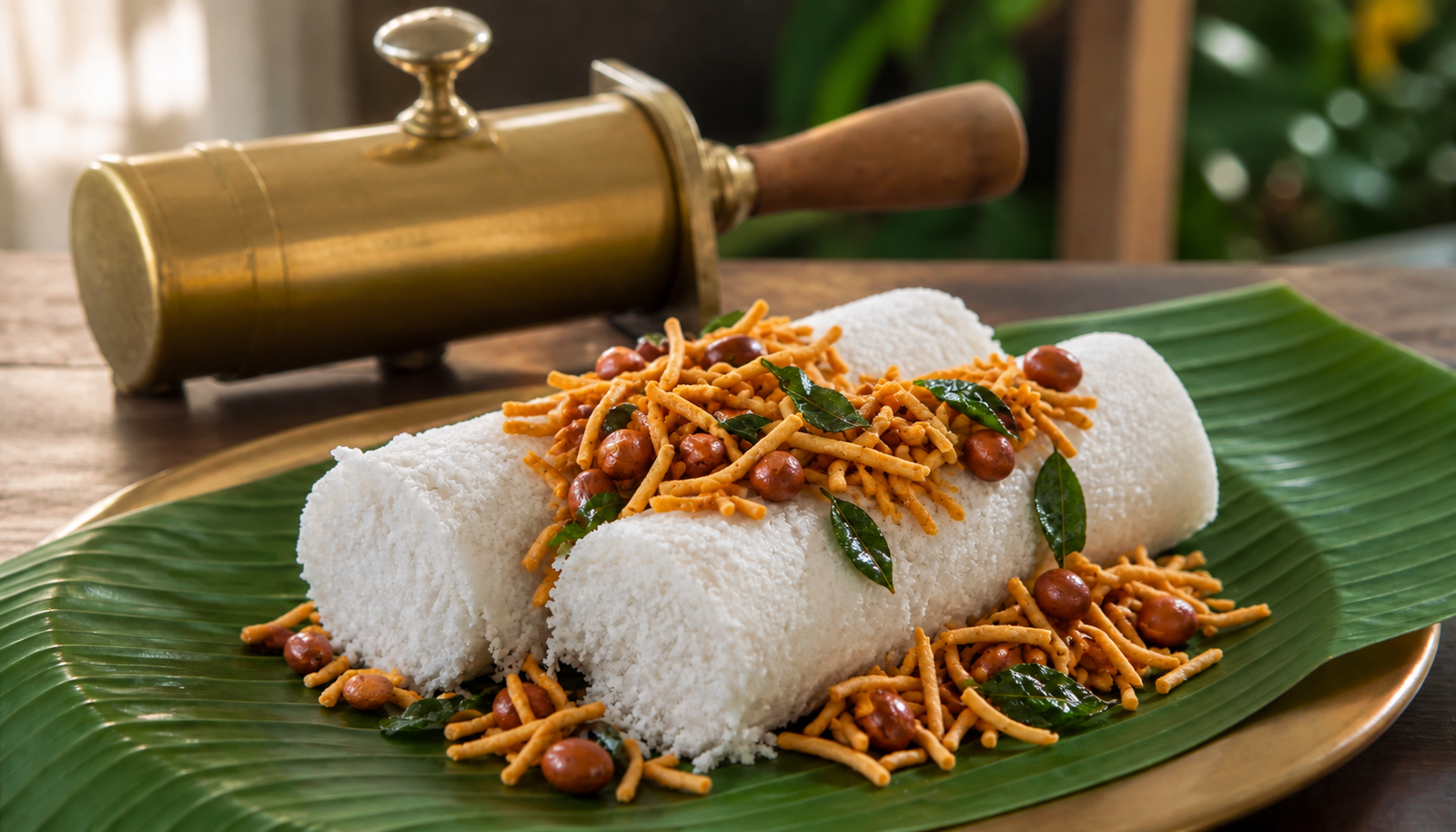
Payyoli mixture is a dry, crispy snack made primarily from beaten rice flakes (aval), roasted peanuts, fried curry leaves, dried red chilies, and a blend of spices that typically includes turmeric, chili powder, and asafoetida. The ingredients are fried separately at specific temperatures before being combined – this is what gives the mixture its characteristic multi-layered crunch. Each element contributes a different texture: the flattened rice flakes shatter cleanly, the peanuts give a deeper, sustained crunch, and the curry leaves add a brittle, papery crispness.
What distinguishes Payyoli mixture from generic Kerala mixture or Chennai mixture is the rice flake base. Most South Indian mixtures use sev (chickpea flour noodles) or murukku as their primary component. Payyoli mixture centers the rice flake, which creates a lighter, more delicate crunch and a flavor profile that is saltier and more aromatic rather than rich or oily.
The Perfect Pairing: Why Soft Puttu and Crunchy Payyoli Mixture Work Together
The science of food texture pairing is straightforward: we eat with contrast. A food that delivers only one texture – only soft, only crunchy, only chewy – becomes monotonous faster than a food that offers variation within a single bite. Puttu, by itself, is pleasant but textually one-dimensional. Payyoli mixture, eaten alone, can feel relentless in its crunch.
Together, they solve each other’s limitation. The soft, crumbly rice cake absorbs a small amount of fat and spice from the mixture, picking up flavor as it breaks apart. The crunchy elements of the mixture remain intact long enough to create contrast in the same mouthful. The coconut layered inside the puttu adds a gentle sweetness that tempers the heat of the chilies in the mixture.
I have seen home cooks in Kozhikode pour the mixture directly over the puttu as it is pushed from the steamer, letting the heat soften the very top layer of rice flakes just slightly – not enough to lose the crunch, but enough to create a warm, aromatic coating. That thirty-second window is where the magic happens.
Nutritional Profile: What You Are Actually Eating
One standard serving of puttu (approximately 100g, steamed) contains around 160-180 calories, 3-4g of protein, 30-35g of carbohydrates, and 2-4g of fat from the coconut, based on estimates from the Indian Food Composition Tables (National Institute of Nutrition, India). It is naturally gluten-free and contains no added oil, making it one of the lighter traditional breakfast options in South Indian cuisine.
As Netmeds Health Library notes, puttu made with red rice flour provides additional fiber and micronutrients compared to white rice versions, including iron and B vitamins.
Payyoli mixture adds approximately 100-130 calories per 30g serving (estimated), along with protein from peanuts and a modest amount of healthy fats. The combination is more calorie-dense than a plain puttu breakfast but remains within reasonable limits for an active adult’s morning meal.
The pairing also delivers a practical nutritional benefit: the protein and fat from the mixture slow the digestion of the rice-based puttu, reducing the post-meal blood sugar spike that can come from eating refined carbohydrates alone. This matters especially for those using red rice or ragi puttu as part of a health-conscious diet.
Step-by-Step Preparation Guide
Equipment You Need
- Puttu kutti (puttu maker): The traditional cylindrical steamer, available in brass, aluminum, and stainless steel. A pressure cooker with a steamer attachment works as a substitute.
- Food processor or grater: For fresh coconut preparation.
- Kitchen scale: For precise flour-to-water ratios.
- Wide mixing bowl: For moistening the flour.
Preparing the Puttu
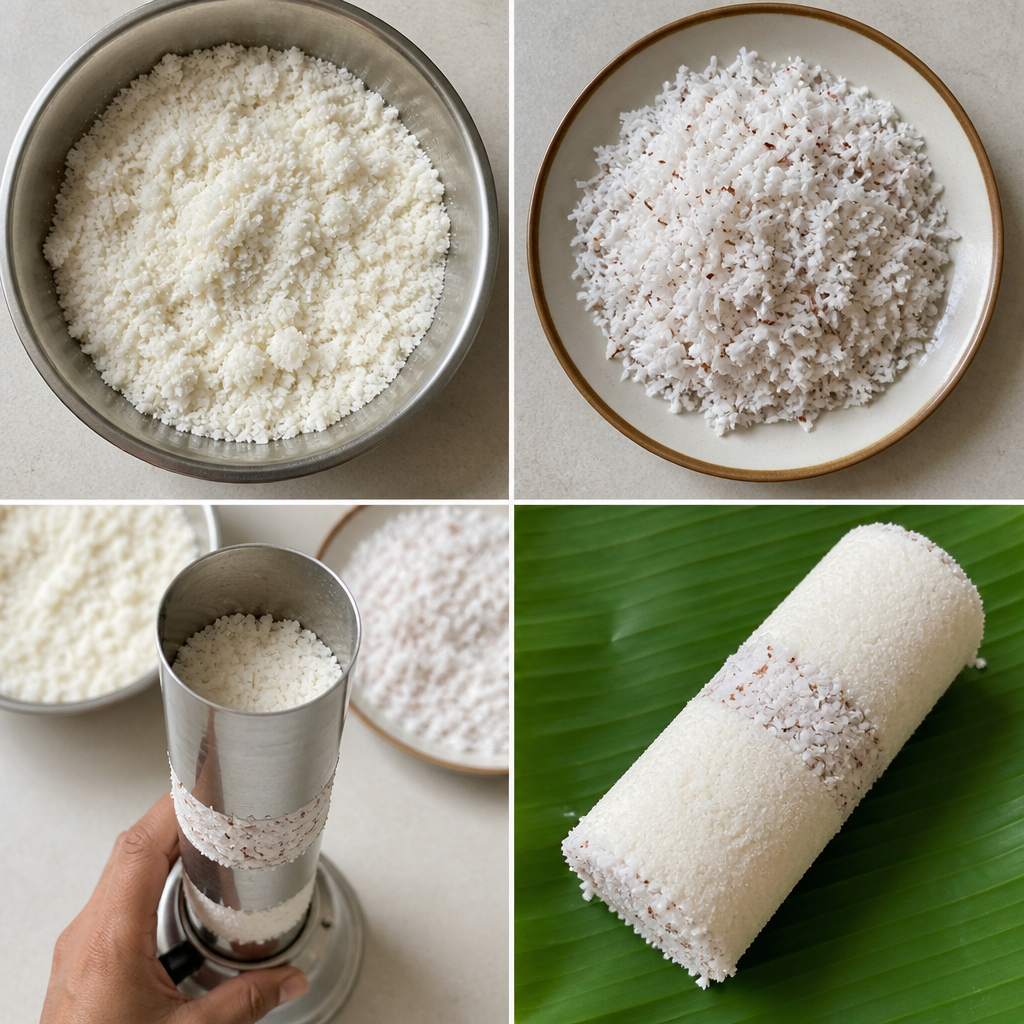
- Measure 200g of puttu podi (white or red rice flour) into a wide bowl. Add a pinch of salt and mix dry.
- Add water gradually – start with 70ml and add more a tablespoon at a time. Mix by rubbing the flour between your palms. Stop when the flour clumps when pressed but crumbles apart when dropped from a height of six inches.
- Rest for five minutes. This allows the moisture to distribute evenly through the flour.
- Layer the puttu kutti: Add a small disc of coconut to the base (perforated end), then a layer of moistened flour (about 3-4 tablespoons), then another layer of coconut, then more flour. Repeat until the cylinder is full. Do not press or compact the layers – this traps steam and creates a dense, gummy result.
- Steam for six to eight minutes over medium-high heat. The puttu is ready when steam exits from the top in a steady stream and has continued for at least two minutes.
- Push out onto a plate using the handle or a wooden dowel. The puttu should come out in a single cylindrical cake.
Preparing or Serving Payyoli Mixture
If using store-bought Payyoli mixture – which is the most practical option for busy households and for those outside Kerala – simply open the packet and portion 25-30g per serving. The mixture is a ready-to-eat snack and requires no preparation.
For a freshly made version at home, dry-roast beaten rice flakes in a heavy pan over medium heat until crisp, fry peanuts separately in a small amount of coconut oil with curry leaves and dried red chilies, then combine with turmeric, chili powder, salt, and asafoetida while still warm.
Serving the Combination
- Place the freshly steamed puttu on a plate or banana leaf.
- Scatter 25-30g of Payyoli mixture over the top immediately after plating, while the puttu is still hot.
- Serve with a small banana or a spoonful of jaggery on the side if you prefer a sweet contrast to balance the spice.
- Eat immediately – puttu hardens as it cools, and the mixture begins to lose its crunch if left in contact with steam for more than a few minutes.
How to Source Authentic Ingredients Online
For home cooks outside Kerala, sourcing authentic puttu podi and Payyoli mixture has become considerably easier in the past three years. The Indian ready-to-cook market is projected to reach $1.2 billion by 2027, growing at a CAGR of 14.5% from 2022, and a significant share of that growth is coming from regional specialty products like Kerala breakfast staples.
Here are the platforms most reliably stocking both products as of 2025:
- Amazon India: Stocks multiple brands of puttu podi (KK, Double Horse, Eastern) typically priced between Rs. 60-120 for a 500g pack. Payyoli mixture is available from smaller Kerala brands at Rs. 80-150 for a 200g pack. Delivery reaches most Indian metros within 2-4 days.
- BigBasket: Carries a curated selection of Kerala grocery brands, including red rice puttu podi. The platform’s “Gourmet and World Foods” category is a good starting point.
- Ulamart: A Kerala-focused online grocery platform that ships internationally. Particularly useful for diaspora communities in the UAE and Gulf countries, where demand for authentic Kerala products is high.
For those in the UAE and broader Gulf region, Indian grocery delivery services in the UAE have expanded their Kerala product range significantly to serve the large Malayali community there.
The Kerala State Industrial Development Corporation notes that the state’s food processing sector contributes approximately 10% to total industrial output, and the growing demand from export markets is driving more manufacturers to adopt shelf-stable packaging for products like mixture and puttu podi.
Serving Suggestions and Modern Variations
The classic approach – puttu with Payyoli mixture, a banana, and black tea – is the benchmark. But there is room to build on it without losing the spirit of the dish.
- Add a soft-boiled egg: Halve a soft-boiled egg alongside the puttu. The runny yolk acts as an impromptu sauce that binds the mixture and rice cake together.
- Layer with coconut milk: Pour two tablespoons of warm, thin coconut milk over the puttu before adding the mixture. This creates a richer, creamier base that contrasts even more sharply with the crunch on top.
- Ragi puttu with Payyoli mixture: The earthier flavor of ragi puttu stands up particularly well to the heat of the mixture. This version is popular among health-focused consumers and works as a post-workout breakfast.
- Mini puttu cups: Steam puttu in small cylindrical portions (about 60g each) and serve with mixture in individual portions. This works well for brunches or when introducing the dish to guests who have never tried it.
For ideas on pairing traditional Indian breakfast dishes with modern serving formats, traditional Kerala breakfast recipes offer a useful reference point.
Key Takeaways
- Puttu is a steamed rice and coconut cake – not fried, not spiced, and naturally gluten-free. Its mildness is a feature, not a flaw.
- Payyoli mixture is distinct from generic South Indian mixture because it centers the beaten rice flake, creating a lighter, more aromatic crunch.
- The combination works because of textural contrast: soft and crumbly against brittle and crisp, mild against spiced.
- The flour-to-water ratio and the layering technique are the two variables most home cooks get wrong. Use a scale and resist the urge to press the layers down.
- Authentic ingredients are available on Amazon India, BigBasket, and Ulamart, with international shipping options from platforms like Ulamart for diaspora communities.
- Eat the combination immediately after plating – puttu hardens as it cools and the mixture softens from steam if left too long.
Bringing Kerala’s Crunchy-Soft Breakfast to Your Table
Puttu with Payyoli mixture is not a trend. It is a combination that has been evolving quietly in Kerala kitchens for generations, only now finding a wider audience through specialty food stores and e-commerce platforms that make authentic ingredients accessible anywhere in the world.
The preparation asks for patience and attention to texture more than technical skill. Get the moisture level of the flour right, layer without compressing, steam without rushing, and plate without delay. The result – a warm, crumbly, coconut-scented cake crowned with a spiced, aromatic crunch – is one of the most satisfying breakfasts in the South Indian repertoire.
If you are shopping for authentic puttu podi or Payyoli mixture to try at home, South Indian specialty food products available online can help you find verified sellers with good shelf-life packaging. And if you want to explore other traditional Kerala pairings before committing to a full breakfast spread, Kerala-style kadala curry is the classic companion worth knowing.
Try it once. Then tell us in the comments how your first attempt went – what you changed, what surprised you, and whether you went back for seconds.
FAQ
What is puttu and how is it different from other Indian rice dishes?
Puttu is a steamed rice cake from Kerala made by layering coarsely ground rice flour and grated coconut inside a cylindrical steamer called a puttu kutti. Unlike idli or dosa, puttu is not fermented and contains no batter. It is naturally gluten-free, oil-free, and has a firm but crumbly texture that breaks apart easily.
What makes Payyoli mixture different from regular Kerala mixture?
Payyoli mixture originates from Payyoli in Kozhikode district and uses beaten rice flakes (aval) as its primary component rather than sev or murukku used in most South Indian mixtures. This creates a lighter, more delicate crunch with a saltier, more aromatic flavor profile that is less oily than generic mixture varieties.
Can I use a pressure cooker instead of a puttu kutti to steam puttu?
Yes. A pressure cooker with a steamer attachment works well as a substitute for a traditional puttu kutti. Fill a steel or aluminum cylinder with the layered flour and coconut, place it over the steam vent, and steam for six to eight minutes without the weight on the lid. The texture is comparable to the traditional method.
Where can I buy authentic Payyoli mixture outside Kerala?
Payyoli mixture is available on Amazon India, BigBasket, and Ulamart, with prices typically ranging from Rs. 80-150 for a 200g pack depending on the brand. Ulamart offers international shipping to UAE and other Gulf countries, making it a reliable option for the Malayali diaspora community.
Is the puttu and Payyoli mixture combination suitable for a health-conscious diet?
Yes, with some consideration. Puttu is naturally oil-free and low in fat, containing around 160-180 calories per 100g serving (estimated, based on Indian Food Composition Tables). Payyoli mixture adds protein from peanuts and healthy fats. Using red rice or ragi puttu increases fiber content further. The combination is a balanced breakfast option for most adults.
How do I get the right texture for puttu – not too dense and not falling apart?
The key is moisture level. Add water gradually to the rice flour until it clumps when pressed but crumbles when dropped from a height. Avoid pressing or compacting the layers inside the puttu kutti – loose layering allows steam to circulate properly. Over-compressing is the most common cause of dense, gummy puttu.
How long does store-bought Payyoli mixture stay fresh?
Store-bought Payyoli mixture typically has a shelf life of three to six months when unopened, depending on the packaging and preservatives used. Once opened, store in an airtight container and consume within two to three weeks for best crunch. Keep away from moisture – humidity is the main factor that causes mixture to go soft.
